
A sudden, throbbing toothache can disrupt your entire day, causing significant discomfort and making it hard to focus on anything else. While your first thought might be to find an emergency dentist in San Diego, sometimes you need immediate, temporary relief before you can get to an appointment. At Nimmi Shine Dental, we understand how concerning dental pain can be. While these toothache home remedies can offer temporary comfort, they are not a substitute for professional care.
It's important to recognize that these remedies are temporary measures, not cures. The underlying cause of a toothache, whether it's a cavity, an infection, a cracked tooth, or gum disease, requires a professional diagnosis from a trusted local provider. Ignoring the root problem can lead to more severe complications, potentially affecting your whole-mouth health.
At Nimmi Shine Dental, we are dedicated to providing exceptional restorative dentistry, cosmetic dentistry, and family dentistry to the San Diego community. We also believe in empowering our patients with reliable information to reduce anxiety and build trust. This guide will walk you through proven at-home methods for temporary pain management and clarify when it’s time to stop self-treating and schedule a consultation with your dentist in San Diego, CA. Let's explore how you can find comfort now and why partnering with us is the key to lasting oral health.
1. Saltwater Rinse
A simple saltwater rinse is one of the oldest and most effective toothache home remedies, often recommended by dentists for its gentle yet powerful properties. This remedy relies on basic osmosis and the natural antibacterial qualities of salt. When you rinse with salt water, the salt solution creates a high-saline environment that helps draw out fluid from inflamed gum tissues, reducing painful swelling.
Salt also acts as a natural disinfectant, cleansing the area around the aching tooth. It can help kill bacteria that contribute to infection and irritation, making it particularly useful for toothaches caused by gum issues, a developing abscess, or food particles trapped between the teeth. The warm water itself provides soothing comfort by increasing blood flow to the area, which can help speed up the natural healing process. This simple step is a great example of how basic oral health practices can support broader whole-mouth health.
How to Prepare and Use a Saltwater Rinse
For this remedy to be effective, proper preparation and use are key. Follow these simple steps for maximum relief:
- Create the Solution: Dissolve a half-teaspoon (1/2 tsp) of table salt or sea salt into an 8-ounce glass of warm water. Using distilled or filtered water is a good practice to avoid any minerals in tap water that might cause further irritation. The water should be warm, not hot, to avoid shocking a sensitive tooth.
- Rinse Thoroughly: Take a sip and swish the solution around your mouth for at least 30 to 60 seconds. Focus on directing the water over and around the painful tooth.
- Spit, Don't Swallow: After swishing, spit the solution out completely. Swallowing the saltwater can lead to dehydration and is not recommended.
- Repeat as Needed: You can repeat this process 2-3 times daily, especially after meals, to help keep the area clean and reduce inflammation.
This method is especially useful for managing discomfort from various dental issues. For example, patients in San Diego with early-stage gingivitis often find that regular rinsing alleviates soreness and bleeding. It’s also a common recommendation for pain associated with wisdom teeth, as it helps cleanse the hard-to-reach area.
2. Clove Oil Application
Clove oil is a long-revered home remedy for toothaches, celebrated in traditional medicine for centuries and still recognized for its potent effects. Its power lies in a compound called eugenol, which acts as a natural anesthetic and antiseptic. When applied directly, eugenol numbs the nerve endings in the tooth and surrounding gums, providing swift, temporary relief from throbbing pain. This makes it one of the most effective toothache home remedies for acute discomfort.
Beyond its numbing properties, clove oil's antimicrobial nature helps fight the bacteria that can cause infection and inflammation. This dual-action approach not only dulls the pain but also helps to cleanse the affected area, making it a valuable tool for managing discomfort while awaiting professional dental care in San Diego. This remedy can be a lifesaver for patients experiencing severe pain that disrupts daily life while they wait for an appointment for restorative dentistry.
How to Prepare and Use Clove Oil
Correct application is essential to get relief without causing irritation to the sensitive tissues in your mouth. Always use pure clove oil, not a flavoring extract, and follow these steps carefully:
- Dilute the Oil: Clove oil is very strong and can burn soft tissues if used undiluted. Mix 2-3 drops of pure clove oil with a half-teaspoon (1/2 tsp) of a carrier oil, such as coconut or olive oil. This 1:1 ratio helps prevent irritation.
- Apply with Precision: Soak a clean cotton ball or cotton swab in the diluted oil solution, ensuring it is saturated but not dripping. Gently press the cotton ball against the aching tooth and the adjacent gum line.
- Hold and Remove: Leave the cotton ball in place for about 10-15 minutes to allow the eugenol to take effect. Avoid swallowing the oil.
- Repeat as Needed: You can repeat this application every 2-3 hours for pain management. Be sure to wash your hands thoroughly after handling the oil to avoid accidentally touching your eyes.
This method is often a go-to for individuals waiting for a root canal, as it can manage the intense nerve pain associated with an infected tooth pulp. If you are experiencing persistent, severe throbbing in San Diego, CA, it's a clear sign it's time to see your dentist at Nimmi Shine Dental for a definitive solution.
3. Cold Compress or Ice Pack Application
Applying a cold compress or ice pack to the outside of your jaw is a fast-acting toothache home remedy that provides numbing relief. This method, a form of cryotherapy, works by constricting the blood vessels in the affected area. This constriction reduces blood flow, which in turn helps to decrease swelling and inflammation, two major sources of toothache pain. The cold also numbs the nerve endings, slowing down the transmission of pain signals to the brain and giving you a much-needed break from the discomfort.

This remedy is particularly effective for toothaches caused by trauma, such as a sports-related injury to the mouth, or swelling from a dental abscess. For example, a patient experiencing a sudden, throbbing pain with visible facial swelling from an abscessed tooth often finds significant relief within 10-15 minutes of application. The effectiveness of cold therapy versus heat depends on the cause of the pain. For a complete understanding, consider reading about Heat Therapy vs Cold Therapy: Choosing the Right Pain Relief.
How to Prepare and Use a Cold Compress
Proper application is essential to get relief without causing harm to your skin. Follow these steps for safe and effective use:
- Prepare the Compress: Wrap a handful of ice cubes, a gel pack, or a bag of frozen vegetables in a thin towel or cloth. This barrier is crucial to prevent direct contact with your skin, which can cause frostbite or tissue damage.
- Apply to the Area: Hold the wrapped compress against the outside of your cheek or jaw, directly over the source of the pain.
- Time the Application: Apply the cold compress for 15-20 minutes at a time. It's important to remove it after 20 minutes to allow the skin and tissues to return to normal temperature.
- Repeat as Needed: You can reapply the compress after a 10 to 15-minute break. This cycle can be repeated every few hours throughout the day for continuous pain management.
This technique is a go-to for many types of dental pain in San Diego households, from children experiencing soreness to adults dealing with the aftermath of oral surgery. While it provides excellent temporary relief, it does not address the underlying cause of the toothache. If pain persists, seeking professional care at Nimmi Shine Dental is the next step to diagnose and treat the root problem, which may involve family dentistry or other specialized services.
4. Hydrogen Peroxide Rinse
A hydrogen peroxide rinse is another potent tool among toothache home remedies, known for its strong antimicrobial and cleansing action. This remedy uses a diluted solution of 3% hydrogen peroxide, the standard variety found in most drugstores, to combat bacteria that cause infections and pain. Its effectiveness comes from an oxidation process; when the peroxide comes into contact with bacteria and organic debris in your mouth, it releases oxygen bubbles. This fizzing action helps to kill bacteria, break down plaque, and flush out trapped food particles.
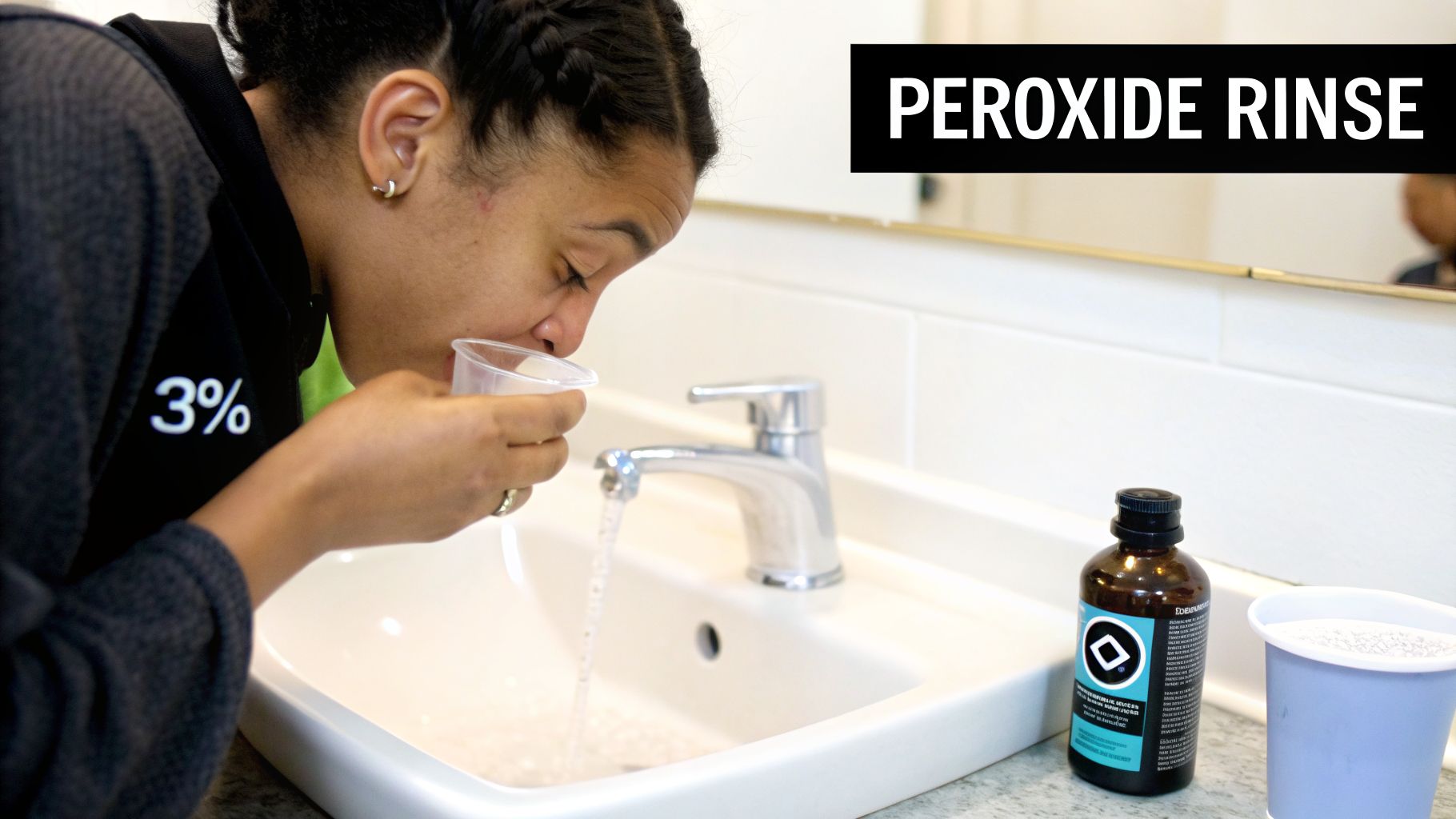
The antiseptic properties make it particularly useful for pain stemming from bacterial overgrowth, such as in cases of gingivitis or a developing gum abscess. By reducing the bacterial load in the mouth, the rinse can help decrease inflammation and provide temporary relief from the throbbing pain associated with these conditions. It can also be a valuable pre-treatment measure for patients in San Diego, CA, to help clean the area before a professional dental procedure.
How to Prepare and Use a Hydrogen Peroxide Rinse
Careful preparation is essential to use this remedy safely and avoid irritation. Always use a food-grade 3% hydrogen peroxide solution and follow these instructions:
- Dilute the Solution: Mix equal parts of 3% hydrogen peroxide and water. Never use peroxide undiluted, as it can be too harsh on your gums and oral tissues. A 1:1 ratio is standard for a safe and effective rinse.
- Rinse Gently: Take a mouthful of the diluted solution and swish it around your mouth for about 30 to 60 seconds. Make sure to direct the liquid toward the painful area, but avoid aggressive swishing that could worsen the pain.
- Spit, Don't Swallow: After rinsing, spit the solution out completely. It is critical that you do not swallow hydrogen peroxide, as it can cause stomach upset and other internal issues.
- Use Sparingly: This rinse should only be used as a short-term measure, typically 1-2 times daily, for acute infections. It is not intended for long-term daily use. Discontinue if you experience any irritation.
This method is best suited for bacterial-related pain and should be considered a temporary fix until you can see a dentist. If your pain persists, it is a sign of an underlying problem that requires professional care. The team at Nimmi Shine Dental can provide a proper diagnosis and treatment plan for patients in the San Diego area.
5. Peppermint Tea Bags or Extract
Another popular and effective toothache home remedy involves peppermint, which can be used in the form of tea bags or a diluted extract. Peppermint contains menthol, a compound known for its mild numbing and cooling properties. When applied to a sore area, menthol provides a gentle anesthetic effect that can temporarily dull toothache pain.
Peppermint also possesses antibacterial qualities that help cleanse the affected area and reduce the microbial load contributing to irritation. Furthermore, the tannins found in peppermint tea have an astringent effect, which helps to shrink and tighten inflamed gum tissues, thereby reducing swelling. This makes it an excellent choice for discomfort stemming from gum inflammation or minor infections. Patients looking for cosmetic dentistry solutions like veneers or Invisalign® may also use this to soothe temporary gum sensitivity.
How to Prepare and Use Peppermint
Whether you have tea bags or extract on hand, you can adapt this remedy to fit your needs. Follow these simple steps for soothing relief:
- Prepare the Tea Bag: Steep one peppermint tea bag in a cup of hot water for 5-10 minutes to allow the beneficial compounds to release. Let the tea bag cool down until it is warm or slightly chilled, but not cold. Apply the damp, cooled tea bag directly against the aching tooth and surrounding gum tissue.
- Hold in Place: Keep the tea bag pressed against the area for 15-20 minutes. You can do this 2-3 times per day as needed to manage pain and swelling.
- Create a Rinse: Alternatively, you can brew a strong cup of peppermint tea, let it cool to a lukewarm temperature, and use it as a mouth rinse. Swish the tea in your mouth for 30-60 seconds, focusing on the painful area, before spitting it out.
- Use an Extract: If using peppermint extract, add a few drops to a cotton ball and apply it directly to the tooth. Be careful to avoid getting pure extract on your gums, as it can cause irritation.
While these toothache home remedies offer valuable, temporary solutions, they are not a substitute for professional care. If your pain is severe or persists, it is important to schedule a visit with a dentist. At Nimmi Shine Dental in San Diego, CA, we can diagnose the underlying cause of your toothache and provide the necessary treatment to restore your oral health.
6. Garlic Paste Application
Garlic has been used for centuries in traditional medicine, and its application as a toothache home remedy is a testament to its powerful natural properties. The key to its effectiveness lies in a compound called allicin, which is released when a fresh garlic clove is crushed. Allicin possesses notable antibacterial, antifungal, and anti-inflammatory qualities, making it particularly effective for toothaches caused by bacterial infections, such as a developing tooth abscess.
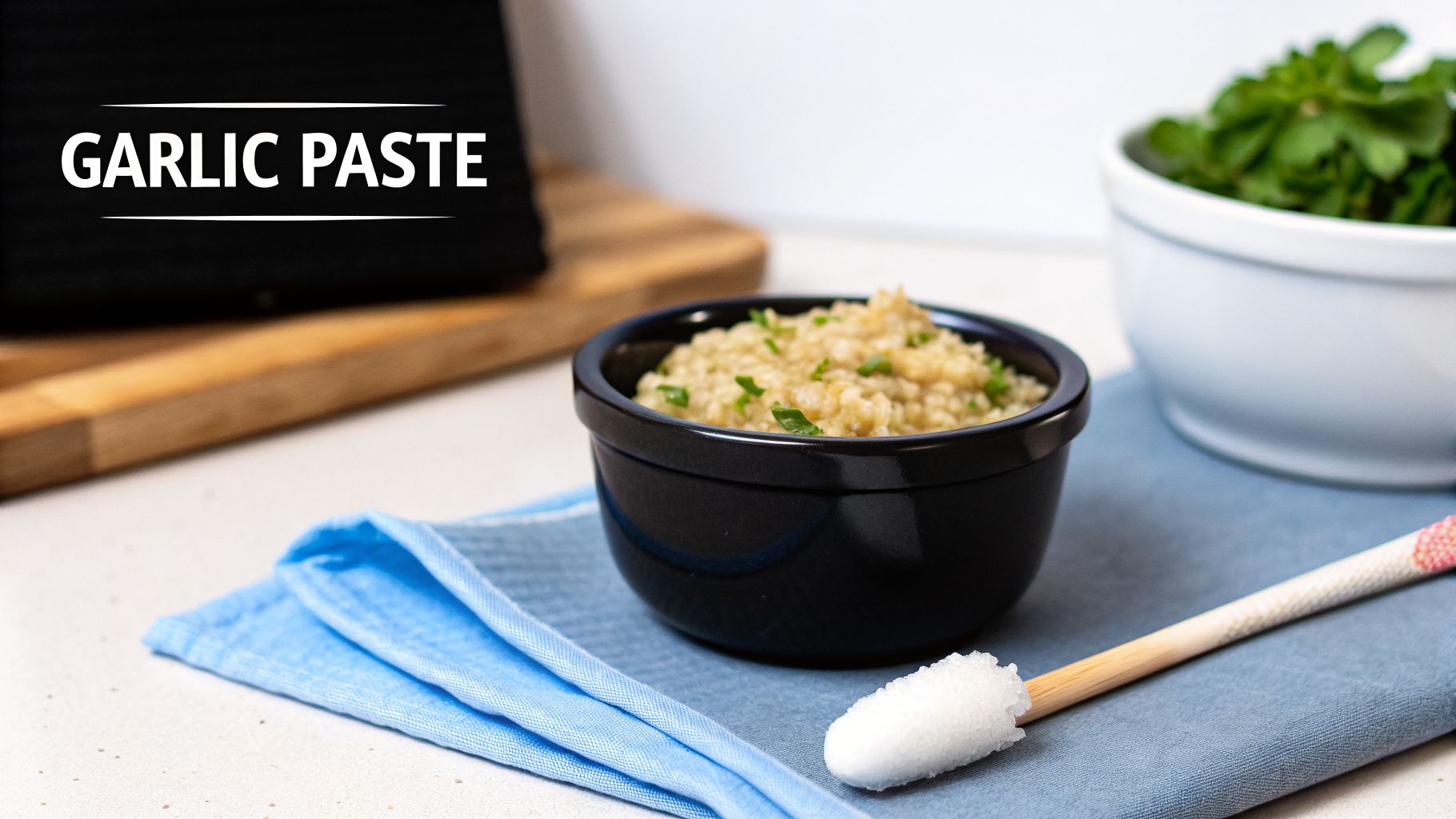
When applied as a paste directly to the sore area, the garlic works to combat the underlying infection, reduce swelling in the surrounding gum tissue, and provide significant pain relief. This direct application concentrates the allicin where it is needed most. For instance, patients in San Diego awaiting a root canal can use garlic to manage infection-related discomfort until their appointment for restorative dentistry.
How to Prepare and Use a Garlic Paste
To get the most benefit from this potent remedy, proper preparation is crucial to activate the allicin. Follow these steps carefully for temporary relief:
- Prepare the Garlic: Take one or two fresh garlic cloves and peel them. Mince, crush, or mash them into a fine pulp to ensure the allicin is fully released. It's important to use fresh garlic, as garlic powder lacks the same potency.
- Create a Paste: Mix the crushed garlic with a pinch of table salt or a few drops of coconut oil. Salt can enhance the antibacterial effect and help draw out fluid, while oil helps the paste adhere to the tooth.
- Apply Directly: Using a clean finger or a cotton swab, apply the paste directly onto the aching tooth and the adjacent gum area.
- Let It Sit: Leave the paste in place for 10-15 minutes. You may feel a mild warming or tingling sensation, which is normal.
- Rinse and Repeat: After 10-15 minutes, rinse your mouth thoroughly with warm water or a saltwater solution to remove the paste and garlic residue. You can repeat this process 2-3 times daily.
This method is one of many effective toothache home remedies, but it's important to recognize that it provides only temporary relief. An underlying infection or cavity requires professional diagnosis and treatment. If you are experiencing persistent tooth pain in San Diego, it is vital to contact Nimmi Shine Dental for a proper examination and to prevent the problem from worsening.
7. Guava Leaf Chewing or Infusion
Hailing from traditional medicine, guava leaves offer a powerful natural solution for tooth and gum pain. This time-tested remedy is recognized for its potent therapeutic benefits. Guava leaves are rich in flavonoids, tannins, and essential oils that possess strong anti-inflammatory, antimicrobial, and analgesic (pain-relieving) properties. When used in the mouth, these compounds work to soothe inflamed gum tissue, reduce the bacterial load contributing to infection, and provide direct pain relief.
The antimicrobial action helps cleanse the mouth and combat the germs responsible for issues like gingivitis and dental abscesses. The anti-inflammatory effect directly targets the swelling and tenderness that cause much of the discomfort associated with a toothache. This makes it one of the most effective toothache home remedies for pain originating from the gums. Some San Diego residents use this remedy to manage chronic gingivitis, reporting a noticeable reduction in inflammation.
How to Prepare and Use Guava Leaves
Whether you chew the leaves directly or create a mouth rinse, proper application is essential for relief. Follow these steps to correctly prepare and use this remedy:
- For Direct Application: Take one or two fresh, young guava leaves and rinse them thoroughly. Gently chew the leaves until their juices are released, allowing the pulp to sit against the affected tooth and gum for 5-10 minutes.
- Create an Infusion: If you prefer a mouthwash, steep 5-6 fresh guava leaves in a cup of boiling water for about 10 minutes. Allow the infusion to cool to a warm, comfortable temperature.
- Rinse Thoroughly: Use the cooled guava leaf tea as a mouth rinse, swishing it around your mouth for 30 to 60 seconds. Focus on the painful area before spitting it out.
- Repeat as Needed: For best results, use either the chewing method or the rinse 2-3 times daily, particularly after meals, to keep the area clean and manage inflammation. If you are concerned about potential staining, simply rinse your mouth with plain water after use.
This natural method is particularly beneficial for those experiencing recurring gum problems, as it can be used for preventive maintenance. While this is a great temporary measure, persistent pain always requires a proper diagnosis from your dentist near you. If your toothache doesn't subside, it's critical to determine if the cause is a deep cavity or a more serious issue that needs expert care from a dentist in San Diego.
8. Thymol (Thyme Oil) or Cinnamon Oil Rinse
Harnessing the power of botanicals, a rinse made with thymol (from thyme oil) or cinnamon oil offers a potent approach to managing toothache discomfort. These essential oils are celebrated for their strong antimicrobial and anti-inflammatory compounds. When properly diluted and used as a mouth rinse, they work to combat the bacterial growth that often causes dental pain, reduce gum inflammation, and provide a mild numbing, or analgesic, effect.
The active ingredients, such as thymol in thyme oil and cinnamaldehyde in cinnamon oil, are scientifically recognized for their ability to disrupt bacterial colonies and soothe irritated tissues. This dual-action relief is why these oils are effective toothache home remedies, targeting both the cause and the symptom of the pain. For individuals in San Diego who prefer natural solutions, a thyme or cinnamon oil rinse can be a successful alternative.
How to Prepare and Use a Thymol or Cinnamon Oil Rinse
To use these powerful oils safely and effectively, correct dilution and application are critical. Follow these instructions for targeted relief:
- Create the Solution: Start by diluting just 1 to 2 drops of food-grade thyme or cinnamon essential oil into an 8-ounce glass of warm water. It is vital to use food-grade oil to ensure safety and to start with a minimal amount to test your tolerance.
- Rinse Thoroughly: Swish a small amount of the diluted mixture in your mouth for 30 to 60 seconds. Make an effort to guide the rinse over the affected tooth and surrounding gum tissue.
- Spit, Don't Swallow: After rinsing, spit the solution out completely. Essential oils are potent and should not be ingested.
- Repeat as Needed: You can perform this rinse 2-3 times per day. If you prefer a topical application, you can mix 1-2 drops with a carrier oil, like coconut oil, and apply it directly to the painful area with a cotton swab.
Before using this remedy, it's wise to test a small, diluted amount on your skin to check for any irritation. While these natural oils provide significant relief for many, they are not a permanent fix. If your pain is severe or persists, it's a sign that you need professional care. The expert team at Nimmi Shine Dental in San Diego can accurately diagnose the root cause of your discomfort and provide the necessary treatment.
8-Point Comparison of Toothache Home Remedies
| Remedy | Implementation complexity | Resource requirements | Expected outcomes | Ideal use cases | Key advantages |
|---|---|---|---|---|---|
| Saltwater Rinse | Very low — simple mix and rinse | Salt, warm water, cup | Temporary antibacterial, reduced inflammation, cleansing within minutes | Mild gingivitis, post-extraction care, trapped food | Extremely affordable and safe; easy repeat use |
| Clove Oil Application | Low–moderate — dilution & topical application | Clove oil, carrier oil, cotton swab | Rapid numbing analgesia (5–15 min), antimicrobial effect | Acute throbbing tooth pain, interim relief before dental care | Fast-acting, clinically recognized anesthetic (eugenol) |
| Cold Compress / Ice Pack | Very low — external application | Ice pack or frozen bag, towel | Immediate numbing, reduced swelling for 15–20 min | Acute trauma, sudden sharp pain, swelling/abscess-related pain | Fastest acting; no chemicals; good for swelling control |
| Hydrogen Peroxide Rinse | Low — dilute and swish carefully | 3% hydrogen peroxide, water, cup | Antimicrobial oxidation, dislodges debris, temporary infection control | Bacterial infections, abscess adjunct, pre-procedural rinse | Powerful antimicrobial action; OTC and low cost |
| Peppermint Tea / Extract | Very low — steep or apply cooled bag | Peppermint tea bags or extract, hot water | Mild anesthetic/cooling, gentle antibacterial, gradual relief | Tooth sensitivity, mild gum inflammation, teething | Gentle and pleasant; safe for regular use and all ages |
| Garlic Paste Application | Moderate — preparation and topical application | Fresh garlic, mortar or knife, optional carrier | Antimicrobial and anti-inflammatory; reduces infection-related pain over hours | Infection-related toothaches, abscess adjunct, interim remedy | Potent natural antimicrobial (allicin); addresses cause |
| Guava Leaf Chewing / Infusion | Moderate — need fresh leaves or infusion prep | Fresh guava leaves or dried leaves, boiling water | Anti-inflammatory, antimicrobial, analgesic for gums | Chronic gingivitis, gum inflammation, preventive maintenance | Effective for gum issues; mechanical cleaning from chewing |
| Thymol / Cinnamon Oil Rinse | Moderate — precise dilution required | Food-grade thymol or cinnamon oil, water or carrier oil | Antimicrobial, anti-inflammatory, reduces biofilm | Bacterial gingivitis, adjunct to oral hygiene, mouthwash alternative | Potent antimicrobial (thymol); pleasant warming sensation |
When Home Remedies Aren’t Enough: Visit Nimmi Shine Dental in San Diego, CA
The toothache home remedies in this guide can be effective for managing discomfort in the short term. They offer a way to regain some control and make life more bearable until you can see a professional. However, it is crucial to understand that their primary function is to provide temporary relief, not to cure the underlying cause of the pain. A persistent toothache is your body’s alarm system.
Recognizing Red Flags: When to Call Your San Diego Dentist Immediately
While remedies like a cold compress can soothe minor irritation, certain symptoms require immediate professional intervention.
Seek professional dental care without delay if you experience:
- Severe, Unrelenting Pain: Pain that doesn't subside with over-the-counter medication or home remedies.
- Pain Lasting More Than 48 Hours: A toothache that persists for more than two days is a clear indicator of an underlying problem.
- Fever or Chills: These are systemic signs that an infection may be spreading.
- Facial Swelling: Swelling in your cheek or jaw is a serious red flag for a significant infection or abscess.
- Difficulty Breathing or Swallowing: This is a critical medical emergency that requires immediate attention.
- A Foul Taste or Pus Drainage: This points directly to an infection that needs to be treated by a dentist.
If your toothache continues to get worse, it might be a sign of a more serious problem. For instance, an infection that develops after a dental procedure could become severe. A helpful resource, Abscess After Root Canal: A Guide to Your Recovery, explains how these complications can arise and why professional care is essential. Ignoring these warnings can lead to more complex issues requiring services like restorative dentistry.
Your Path to Permanent Relief in San Diego, CA
At Nimmi Shine Dental, we understand that a toothache can disrupt your life. When you visit our San Diego, CA office, our first priority is to get you out of pain. From consultation through treatment completion, we use precise diagnostic tools to pinpoint the source of your discomfort. Whether it’s a simple cavity needing a filling, an inflamed nerve requiring restorative dentistry, or a more complex issue, we create a treatment plan specifically for you. We offer a full spectrum of services, from family dentistry and emergency care to cosmetic solutions like veneers and Invisalign®, and even treatments for sleep apnea.
Our patients feel at ease knowing that we explain treatments clearly and simply, helping improve their oral health, function, and appearance. Don’t let a toothache dictate your life. For residents of San Diego and the surrounding communities, your next step toward permanent relief is just a phone call away.
Ready to find a permanent solution to your toothache? Contact Nimmi Shine Dental in San Diego, CA, to move beyond temporary remedies and get expert, compassionate care. Schedule your consultation today at Nimmi Shine Dental and let us restore your smile’s health and comfort.
