
Dental Implants Near Me: The Ultimate Guide to Restoring Your Smile
A smile is often the first thing people notice about you. It conveys confidence, warmth, and happiness. But for millions of people dealing with missing or damaged teeth, smiling can be a source of anxiety rather than joy. Beyond the aesthetic concerns, missing teeth can affect your ability to chew, speak clearly, and maintain the structural integrity of your jawbone.
If you have been hiding your smile or struggling with uncomfortable dentures, you are likely looking for a permanent solution. This search often starts with typing “dental implants near me” into a search bar, hoping to find a reliable professional who can restore both function and aesthetics to your teeth.
This guide explores everything you need to know about dental implants. We will cover what they are, why they are often the gold standard for tooth replacement, and walk you through the entire procedure. By the end, you will have the knowledge needed to make an informed decision about your oral health and understand why choosing the right provider, such as Nimmi Shine Dental, makes all the difference.
What Are Dental Implants?
Definition and Overview
At its core, a dental implant all on four is a prosthetic replacement for a missing tooth root. Unlike dentures or bridges, which sit on top of the gums or rely on neighboring teeth for support, an implant is surgically positioned into the jawbone beneath the gum line. This allows your dentist to mount replacement teeth or a bridge into that area.
An implant typically consists of three parts:
- The Implant Post: A screw-like structure, usually made of titanium, that serves as the root.
- The Abutment: A connector piece placed on top of the implant post.
- The Crown: The custom-made artificial tooth that is visible in your mouth, designed to match your natural teeth in color and shape.
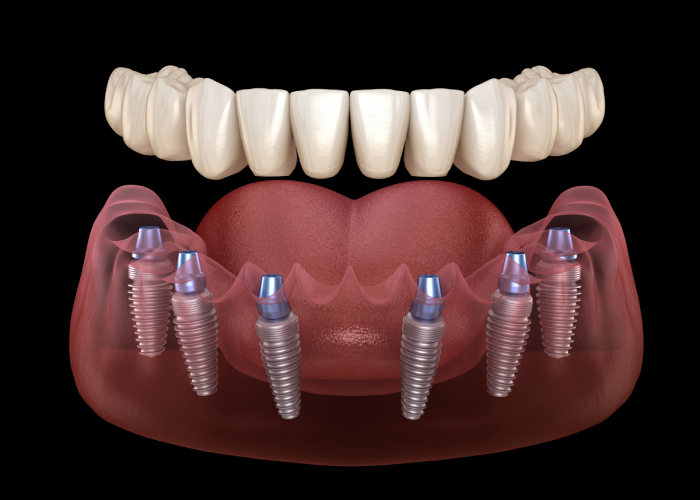
Dental Implants
Why Choose Dental Implants?
Benefits of Dental Implants
There is a reason implants are often recommended over other restoration methods. They offer unique advantages that go beyond simple aesthetics:
- Natural Look and Feel: Implants are designed to look, feel, and function like your own teeth. Because they fuse with your bone, they become permanent.
- Improved Speech: Poor-fitting dentures can slip within the mouth, causing you to mumble or slur your words. Implants allow you to speak without the worry that teeth might slip.
- Easier Eating: Sliding dentures can make chewing difficult. Dental implants nearby function like your own teeth, allowing you to eat your favorite foods with confidence and without pain.
- Durability: Implants are very durable and will last many years. With good care, many implants last a lifetime.
- Bone Health: When you lose a tooth, the jawbone in that area can begin to deteriorate due to lack of stimulation. Implants are the only tooth replacement option that stimulates bone growth and prevents bone loss.
Comparing Dental Implants vs. Other Options
When considering tooth replacement, you generally have three main choices: dentures, bridges, and implants.
- Dentures are removable replacements. While they are often the most affordable upfront option, they can be unstable, require messy adhesives, and do not prevent bone loss. Over time, as the jawbone shrinks, dentures need relining or replacement.
- Dental Bridges bridge the gap created by one or more missing teeth. A bridge is made up of two or more crowns for the teeth on either side of the gap. The downside is that this requires grinding down healthy adjacent teeth to support the bridge.
- Dental Implants, by contrast, do not require altering other teeth. This preserves more of your natural tooth structure, improving long-term oral health.
How to Find the Best Dental Implants Near You
How to Search Effectively
When you begin your search for “dental implants near me,” the number of results can be overwhelming. To filter through the noise, look for specific criteria:
- Credentials: Ensure the dentist has specialized training in implantology.
- Before and After Photos: Look for a gallery of actual patient results to gauge the aesthetic quality of their work.
- Technology: Modern implant dentistry relies on advanced imaging like 3D cone beam CT scans for precise placement.
The Importance of Location
While it might be tempting to travel far for a “discount” procedure, proximity matters. The implant process involves multiple visits over several months—from consultation to surgery, check-ups, and final placement. Having a reputable provider like Nimmi Shine Dental nearby ensures that you can easily attend all appointments and get quick assistance if any minor issues arise during the healing process.
The Dental Implant Procedure: A Step-by-Step Guide
Understanding the process can help alleviate anxiety. Here is a typical timeline for receiving a dental implant.
Initial Consultation and Evaluation
The journey begins with a comprehensive exam. Your dentist will review your medical history, take X-rays, and possibly use 3D modeling to determine the health of your jawbone. This is the planning phase where a customized treatment plan is created.
Implant Placement
During this minor surgical procedure, the dentist makes an incision in the gum to expose the bone. Holes are drilled into the bone where the dental implant metal post will be placed. Since the post will serve as the tooth root, it is implanted deep into the bone. You will still have a gap where your tooth is missing; often, a temporary denture can be placed for appearance.
Healing and Osseointegration
Once the metal implant post is placed in your jawbone, osseointegration begins. During this process, the jawbone grows into and unites with the surface of the dental implant. This process, which can take several months, provides a solid base for your new artificial tooth — just as roots do for your natural teeth.
Abutment Placement
When osseointegration is complete, you may need additional minor surgery to place the abutment—the piece where the crown will eventually attach. This is usually done with local anesthesia. In some cases, the abutment is attached to the implant metal post when the post is implanted, eliminating the need for this extra step.
Crown Placement
Once your gums heal, you will have more impressions made of your mouth and remaining teeth. These impressions are used to make the crown—your realistic-looking artificial tooth. The crown cannot be placed until your jawbone is strong enough to support the use of the new tooth.
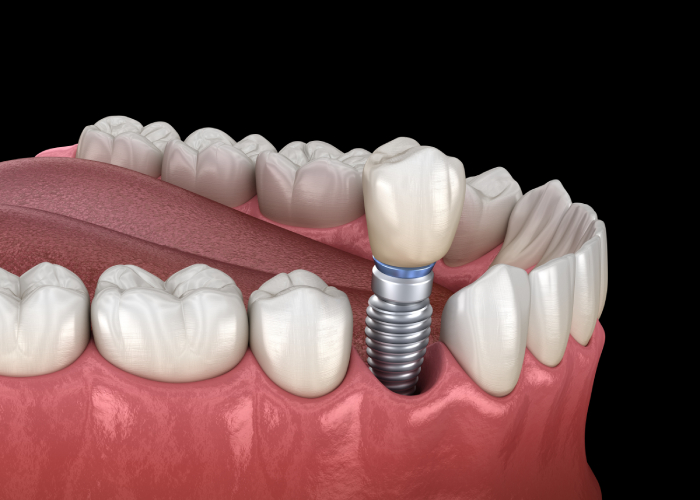
Dental Implant Service
Different Types of Dental Implants
Not all patients have the same needs or bone grafting structure. Fortunately, there are different types of implants available.
Endosteal Implants
These are the most common type of dental implant. They are shaped like small screws, cylinders, or plates and are placed directly into the jawbone. They hold one or more prosthetic teeth. This type of implant is generally used as an alternative for patients with bridges or removable dentures.
Subperiosteal Implants
These sit on top of the jawbone but under the gum tissue. A metal framework is placed under the gum, and as the gum heals, the frame becomes fixed to the jawbone. Posts attached to the frame protrude through the gums to hold the prosthesis. These are typically used for patients who do not have enough healthy natural jawbone and cannot, or do not want to, undergo a bone augmentation procedure to rebuild it.
Zygomatic Implants
These are the least common type and arguably the most complex procedure. They are used only if you don’t have enough jawbone for the Endosteal implant. The implant is placed in the cheekbone (zygoma) rather than the jawbone.
Mini Dental Implants
As the name suggests, these are smaller (narrower) than standard implants. They are often used to stabilize a lower denture and can be placed using less invasive techniques.
How to Care for Your Dental Implants
One of the major advantages of implants is that they require similar care to natural teeth.
Proper Oral Hygiene
You must brush at least twice a day and floss daily. Cleaning & checkup dental around the implant is crucial to prevent “peri-implantitis,” an infection that can lead to implant failure. Using interdental brushes or water flossers can help clean the hard-to-reach areas around the implant crown.
Regular Dental Check-ups
Consistent visits to your dentist are non-negotiable. During these visits, your dentist will examine the health of the soft tissue, the bite, and the integrity of the implant to ensure everything remains stable and infection-free.
How much do dental implants cost?
Cost is often the biggest hesitation for patients. While the upfront cost is higher than dentures, it is important to view implants as a long-term investment.
Factors Affecting the Cost
The price varies depending on several factors:
- The number of teeth needing replacement.
- The location of the teeth.
- Whether bone grafting or sinus lifts are required prior to surgery.
- The type of crown material chosen.
- The geographic location of the dental practice.
Insurance Coverage and Financing Options
Traditionally, dental insurance did not cover implants, classifying them as cosmetic dentistary. However, this is changing. Many plans now cover a portion of the procedure. Additionally, most dental offices offer financing plans or care credit options to break the cost down into manageable monthly payments.

Dental Implant Specialist
Choosing the Right Dental Implant Dentist: Nimmi Shine Dental
The success of your implant relies heavily on the skill of the provider. When you choose Nimmi Shine Dental, you are choosing a practice dedicated to excellence in restorative dentistry.
Qualifications and Experience
The team at Nimmi Shine Dental possesses extensive training in implantology. They stay updated on the latest surgical techniques to ensure the procedure is as minimally invasive and successful as possible.
Patient Reviews and Testimonials
A quick look at patient feedback reveals a history of satisfied smiles. Patients consistently praise the team’s ability to explain complex procedures clearly and their gentle approach to surgery.
Technology and Techniques Used
Nimmi Shine Dental utilizes state-of-the-art diagnostic tools. From digital impressions to 3D imaging, they ensure that every implant is placed with pinpoint accuracy for optimal function and aesthetics.
Addressing Common Concerns and Myths
Pain and Discomfort
Myth: Implant surgery is excruciating.
Reality: Most patients report that the procedure involves less pain than a tooth extraction. Local anesthesia is used during surgery, and most post-operative discomfort can be managed with over-the-counter pain medication.
Longevity of Dental Implants
Myth: Implants need to be replaced every 10 years.
Reality: The crown may need replacement due to normal wear and tear after 10–15 years, but the titanium implant screw itself can last a lifetime with proper care. High success rates (over 95%) make them a reliable long-term solution.
Restore Your Smile with Confidence at Nimmi Shine Dental
Living with missing teeth affects more than just your appearance; it affects your quality of life. Dental implants offer a pathway back to eating the foods you love, speaking with clarity, and smiling without hesitation.
While the process requires time and investment, the result is a permanent restoration that mimics nature perfectly. If you are ready to stop searching for “dental implants near me” and start your journey toward a complete smile, contact Nimmi Shine Dental today. Schedule your consultation and take the first step toward reclaiming your confidence.
Nimmi Shine Dental
https://maps.app.goo.gl/aohBBXWwsG55a1R67
9888 Carroll Centre Rd #112, San Diego, CA 92126, United States
(858) 999-8550
https://nimmishinedental.com/
