
Let's talk about the one thing most people in San Diego worry about after a tooth extraction: bleeding. It's completely understandable to feel a bit anxious, but that initial bleeding is actually a good sign. It’s your body’s way of kicking off the healing process by forming a protective blood clot in the empty socket.
Think of this blood clot as nature’s own bandage. It’s a crucial first step that covers the underlying bone and nerves, setting the stage for a smooth recovery. For our patients at Nimmi Shine Dental, understanding this process can help reduce anxiety and build confidence in your body's ability to heal. We believe that when you're concerned about your oral health, from a missing tooth to your smile's appearance, having a trusted local provider makes all the difference.
What to Expect With Post-Extraction Bleeding
It's very common to see some light oozing or have pink-tinged saliva for the first 24 to 48 hours after your procedure. A little bit of blood goes a long way when mixed with saliva, so it can often look more dramatic than it really is.
This is all a normal part of the body's natural wound healing process, a fascinating sequence that starts the moment your tooth is removed. At Nimmi Shine Dental, we want our San Diego patients to feel empowered, not worried. Knowing what’s normal versus what might need a phone call can make all the difference in your peace of mind.
To help you know what to look for, here's a quick reference table.
A Quick Look at Your Post-Extraction Bleeding Timeline
This table helps you quickly gauge whether your bleeding is within a normal range during the first few days after your procedure.
| Time After Extraction | What You Might See | Your Action Plan |
|---|---|---|
| First 24 Hours | Red or pink saliva, slow oozing, especially after changing gauze. | Apply firm, consistent pressure with fresh gauze as directed. Rest and keep your head elevated. Avoid spitting or rinsing. |
| 24-48 Hours | Mostly pink-tinged saliva. Bleeding should have significantly decreased or stopped. | Continue to rest and avoid strenuous activity. You can begin gentle warm salt water rinses. |
| 3-7 Days | Saliva should be clear. No active bleeding. You may see the dark blood clot in the socket. | Continue with your soft food diet and gentle oral hygiene. Be careful not to dislodge the clot. |
Remember, this is just a general guide. Everyone heals at their own pace, but this timeline gives you a solid idea of what to expect.
The Different Types of Bleeding
When your tooth is removed, your body gets straight to work. The initial bleeding helps clean the area, and that blood clot is the hero of the story. It's quite fragile for the first day or two, which is why following your aftercare instructions to the letter is so important for whole mouth health.
While the thought of bleeding can be a major source of concern, significant complications are quite rare. Most of the time, any oozing is mild and easily handled at home. We categorize bleeding into a few types, which helps us manage it effectively:
- Primary Bleeding: This is the bleeding that happens right after the extraction. It almost always stops within 30-60 minutes once we’ve applied proper pressure in the office.
- Reactionary Bleeding: You might see a little bleeding start up again 2-3 hours later. This often happens as the local anesthetic (and the epinephrine in it, which constricts blood vessels) starts to wear off. It’s usually minor.
- Secondary Bleeding: This is much less common and can show up 7-10 days later. It’s typically caused by a minor infection that disturbs the healing site and the clot.
Our goal is to make sure you feel prepared and supported from the moment you leave our office. When you understand what's normal, you can relax into the healing process and know exactly when it’s time to give our San Diego team a call for guidance.
How To Manage Bleeding At Home
Once you’re settled back home in San Diego, your most important job begins: managing the extraction site to ensure a smooth, quick recovery. The first few hours are all about helping your body form a stable blood clot, which acts as a natural bandage over the empty socket. This is a key step whether the tooth was removed to make way for a dental implant or for other restorative dentistry reasons.
The single most effective thing you can do is apply firm, steady pressure. We’ll send you home with sterile gauze for this very reason. Fold a piece into a thick, small square, place it directly over the extraction site, and bite down. You need to maintain this pressure consistently for a solid 30-60 minutes. It’s incredibly tempting to peek every few minutes to see if it’s working, but trust us—don't. Every time you lift the gauze, you risk disturbing the delicate clot that’s trying to form.
Gentle Techniques To Protect The Clot
Beyond direct pressure, a few simple adjustments to how you rest and move can make a huge difference in controlling any oozing. The main goal here is to avoid anything that creates suction or a spike in blood pressure.
- Elevate Your Head: When you’re resting or sleeping, prop your head up with an extra pillow or two. This isn't just for comfort; elevating your head lowers the blood pressure in the area, which can significantly reduce bleeding and that throbbing sensation.
- No Spitting, No Straws: This one is non-negotiable. The suction created by spitting, smoking, or sipping through a straw is the number one enemy of a new blood clot. It can easily dislodge it, leading to more bleeding and potentially a painful condition called dry socket.
- Try a Tea Bag: Here’s an old-school trick that works wonders if you run out of gauze. Moisten a regular black tea bag (like Lipton or English Breakfast), place it over the site, and bite down. The tannic acid in black tea is a natural astringent that helps shrink blood vessels and promotes clotting.
This process might seem complex, but your body knows exactly what to do. The goal is to simply help it along.
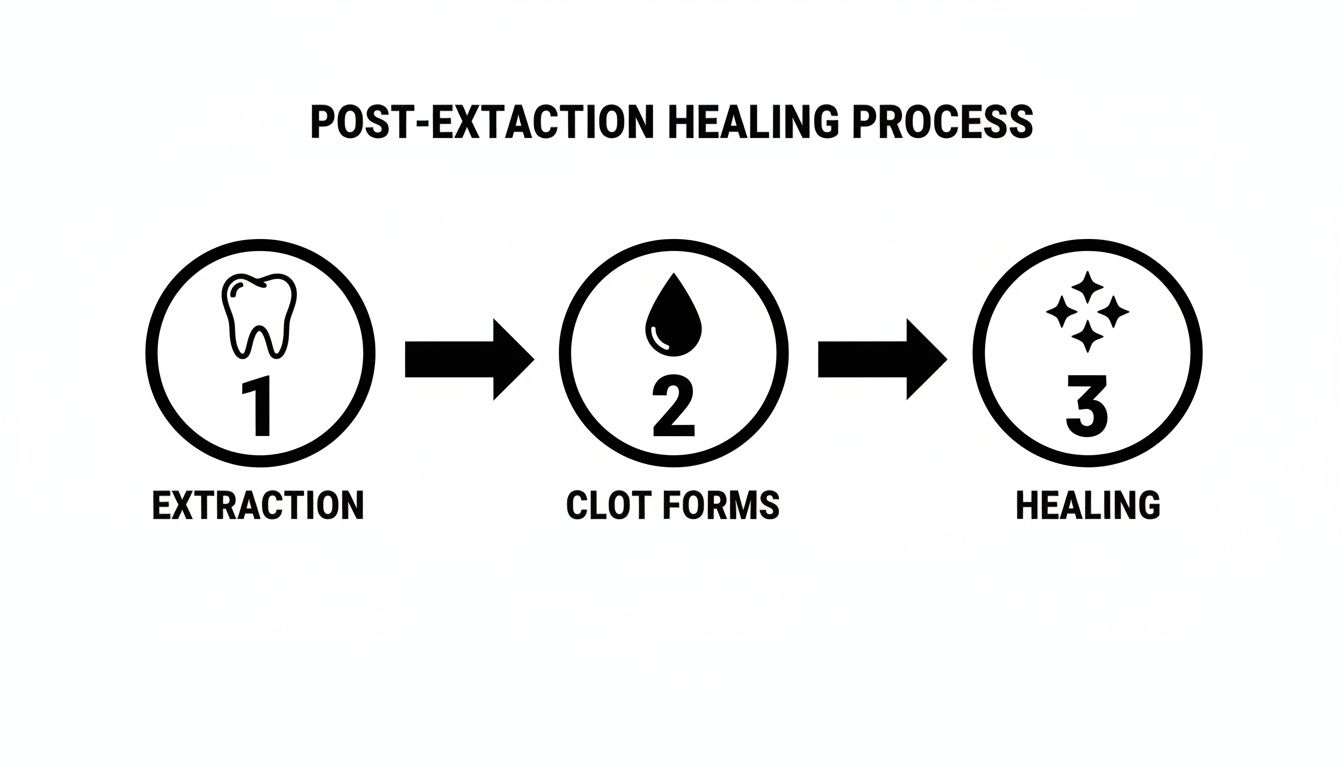
As you can see, that blood clot is the crucial bridge between the extraction and proper healing. It protects the underlying bone and nerves and provides the foundation for new tissue to grow.
Actions To Avoid In The First 24 Hours
The first day after your extraction is the most critical window for healing. Think of it as a protected zone. Certain activities are off-limits because they directly interfere with the clotting process and can set your recovery back.
Your body needs to focus its energy on healing, which means you need to rest. Any strenuous activity—from a gym workout to heavy lifting—ramps up your heart rate and blood pressure. That increased pressure can easily trigger fresh bleeding at the extraction site. Take it easy for at least the first 24-48 hours.
For a more detailed breakdown of what to eat, how to clean your mouth, and other recovery tips, our team at Nimmi Shine Dental put together a complete guide on what to do after a tooth extraction. This resource gives our San Diego patients the confidence to navigate every stage of their healing.
By carefully following these steps at home, you’re not just managing bleeding—you’re setting the stage for a comfortable and complication-free recovery.
Health Conditions That Can Affect Healing
Your overall health plays a much bigger role in your recovery than you might think, especially after a tooth extraction. At Nimmi Shine Dental, we look at your entire health profile, not just your teeth. Why? Because many common medications and medical conditions can directly influence how you heal, particularly when it comes to bleeding after tooth extraction.
For our San Diego patients, this conversation is one of the most important parts of planning their procedure. It’s a critical piece of how we provide safe, personalized care. From family dentistry to cosmetic solutions like veneers, understanding your health is our priority.
Medications That Influence Bleeding
Certain medications are designed to thin the blood or prevent clots. While they are vital for protecting your cardiovascular health, they require special attention during any kind of oral surgery. If you take any of the following, it's absolutely crucial to discuss it with us beforehand:
- Anticoagulants: These are powerful drugs like warfarin (Coumadin®), rivaroxaban (Xarelto®), and apixaban (Eliquis®), often prescribed to prevent serious events like strokes or blood clots.
- Antiplatelet Drugs: Even common medications like aspirin and clopidogrel (Plavix®) work by making your blood platelets less sticky, which can naturally prolong bleeding time.
It's a persistent myth that you need to stop these essential medications before a dental procedure. In almost all cases, we strongly advise against stopping them. The risk of a serious cardiovascular event far outweighs the manageable risk of dental bleeding.
Instead, we work with you and your physician to put specific protocols in place. This allows us to manage any bleeding risk safely right here in our San Diego office, without compromising your overall health.
How Pre-Existing Conditions Affect Clotting
Beyond medications, your body's innate ability to form a stable blood clot is tied to your health. Certain conditions can interfere with this natural process, sometimes leading to more persistent oozing after an extraction.
Some of the most common ones we see include:
- High Blood Pressure (Hypertension): Think of it like a plumbing system under too much pressure. Elevated blood pressure can make it physically harder for bleeding to stop. We always take a baseline reading before starting any procedure.
- Liver Disease: Your liver is a factory for many of the proteins essential for blood clotting. If its function is compromised, your body's ability to form a clot can slow down.
- Bleeding Disorders: Inherited conditions like hemophilia or von Willebrand disease directly impact the clotting process and require a coordinated care plan between our team and your medical specialist.
Open communication is the foundation of safe dental care. By understanding your full medical history, we can tailor our approach, from the techniques we use during the extraction to the specific aftercare instructions you receive.
Recent research helps put this into perspective. A 2022 analysis showed that while hemorrhage was rare in patients not taking blood thinners (only 0.39%), the frequency rose slightly for those on medications like rivaroxaban (3.41%) and warfarin (3.63%). These are very manageable statistics, and they reinforce why having a proactive plan is so important. Dentists are well-prepared for these scenarios.
A healing site that struggles to form a clot can also become more vulnerable. Understanding the risks of developing secondary infections is a key part of managing your recovery. By being open and proactive with our team, you help ensure your healing journey is as smooth and uneventful as possible.
Warning Signs That Mean You Should Call Your Dentist
After an extraction, it can be tough to tell the difference between normal healing and a sign that something’s off. Let’s cut through the confusion and give you a clear, no-panic guide on when it’s time to call our San Diego office.
And let me be crystal clear about one thing: we would always rather you call with a question than have you sit at home and worry. Your peace of mind matters, and a quick phone call can put your mind at ease or get you the help you need, fast.

When Bleeding Becomes A Concern
Some initial oozing is totally normal, but persistent, heavy bleeding is not. It’s definitely time to get in touch with our office if you’re dealing with any of these issues:
- Non-Stop Bleeding: The bleeding just won’t slow down after several hours, even though you’re applying firm, consistent pressure.
- Heavy Soaking: You’re soaking through a brand-new gauze pad in less than an hour.
- Passing Large Clots: Seeing large, jelly-like clots means a stable, protective blood clot isn't forming properly in the socket.
If you’re nodding along to any of these, it’s a sign that the natural clotting process isn't working as it should. A quick call helps us figure out the next steps to get your healing back on track.
Pain and Other Red Flags
Beyond bleeding, your body has other ways of waving a red flag. Pain is part of the deal, but it should be manageable and get a little better each day.
The most famous complication is, of course, a dry socket. If you’re experiencing a severe, throbbing pain that your prescribed medication doesn't even touch, it could be a sign of this painful condition. We break down how to identify it in our guide on throbbing pain after tooth extraction.
You should also give us a ring if you notice:
- Signs of Infection: This includes developing a fever, getting the chills, or noticing a foul taste or pus coming from the extraction site.
- Lingering Numbness: The numbness from the anesthetic lasts for more than a day after your procedure.
- Trouble Swallowing or Breathing: These are rare but serious signs that require immediate attention.
Your personal health history plays a huge role here. For instance, conditions like thrombocytopenia (low platelet count) dramatically increase bleeding risks. A 2021 study highlighted this, finding that post-extraction bleeding happened in 7.7% of patients with low platelets, a sharp contrast to just 1.1% in those with normal levels. You can read more about the study on jkaoms.org.
When you call our San Diego practice, we’ll listen carefully to what you're experiencing and give you clear, simple instructions. Sometimes it’s a fix you can handle at home, and other times we’ll have you come in for a quick check-up. Your health and comfort are what matter most to us.
Your Recovery Experience At Nimmi Shine Dental
When you have a tooth taken out, the procedure itself is only half the story. The real measure of care is what happens after you leave the chair, especially if you run into common concerns like bleeding after a tooth extraction. At Nimmi Shine Dental, we believe our job isn't done until you're fully healed, and we're committed to making your recovery as smooth and worry-free as possible.
From your first consultation, we explain how dental treatments work. Our entire approach is built around minimizing trauma from the very beginning. We use precise, gentle techniques for every extraction, whether it’s a wisdom tooth removal or clearing a space for a future dental implant. By treating the delicate gum and bone tissue with the utmost respect, we dramatically cut down on post-op swelling and bleeding, giving you a head start on a comfortable recovery.
What Patients Can Expect Visiting Nimmi Shine Dental in San Diego, CA
We’ve always seen oral health as being deeply woven into your overall wellness. It’s a cornerstone of our San Diego practice. This means our care doesn't just stop when the tooth is out—that’s actually where our detailed guidance begins. We’ll arm you with aftercare instructions that are tailored specifically for you, so you know exactly what to do, what to eat, and what to skip.
This becomes especially critical for our patients with medical histories or medications that might make them more prone to bleeding. We take the time to really listen and understand your health profile, allowing us to create a recovery plan that is both safe and effective for your body. Our goal is always to get ahead of complications, not just react to them.
At Nimmi Shine Dental, you’re never just a chart number. As a private practice right here in San Diego, we pride ourselves on building real, lasting relationships. You’ll always see a familiar, friendly team that knows your history and is genuinely invested in your health for the long run.
The Benefits of a Long-Term Solution
We see every procedure, even an extraction, as part of a much bigger picture for your health and confidence. Pulling a tooth is often the first, necessary step toward achieving a smile you can truly feel great about. For many of our patients, it opens the door to planning what comes next.
We can seamlessly integrate your extraction into a broader treatment plan that includes world-class restorative solutions right in our office:
- Dental Implants: This is the gold standard for replacing missing teeth. An implant provides a rock-solid, permanent foundation for a new crown that looks and feels completely natural. Searching for a "dental implant dentist near me" in San Diego ends here.
- Cosmetic Dentistry: We make sure any new restoration, whether it’s part of a bridge or an implant, blends perfectly with your unique smile. This includes options like veneers to achieve your aesthetic goals.
- Family Dentistry: We offer this same level of detailed, compassionate care to every member of your family, creating a trusted dental home for all ages.
From your very first consultation to your final follow-up, our team is here to guide you. We want your experience to be a positive one, reinforcing that a necessary procedure like an extraction is a powerful step toward better health. We are proud to serve the San Diego, CA community with this patient-first philosophy, ensuring you feel heard, understood, and supported every step of the way.
Common Questions About Extraction Aftercare
No matter how thorough our instructions are, we know questions always pop up once you get home. It’s completely normal. To help you feel more confident during your recovery, here are some practical answers to the most common questions we hear from our San Diego patients.
When Can I Start Eating Normally Again?
That first meal post-extraction is a big milestone, but this is where patience really pays off. It’s crucial to wait until the anesthetic has completely worn off. This prevents you from accidentally biting your tongue, cheek, or lip while they’re still numb.
For the first few days, your menu should consist of soft, cool foods. Think yogurt, smoothies (but remember, no straws!), applesauce, or lukewarm soups. Anything hot, spicy, or crunchy is off-limits for now. These foods can easily irritate the delicate healing tissue or, even worse, dislodge the blood clot that’s so vital for healing.
How Do I Keep My Mouth Clean After The Extraction?
Keeping your mouth clean is essential, but it requires a very gentle approach. You should absolutely continue to brush your other teeth, but be extremely careful to stay away from the extraction site for at least the first 24 hours.
After that initial day, you can start rinsing gently with warm salt water. A simple mixture—half a teaspoon of salt in an eight-ounce glass of water—used after meals will help keep things clean. The trick is how you rinse. Do not spit forcefully. Simply tilt your head from side to side, then lean over the sink and let the water fall out of your mouth. This simple action avoids the suction that spitting creates, which could pull out the clot.
What Exactly Is A Dry Socket?
You’ve probably heard the term, and it’s one complication we work hard to help you avoid. A dry socket is a painful condition that happens if the protective blood clot in the socket gets dislodged or dissolves before the wound has healed.
When this happens, the underlying bone and sensitive nerves are left exposed to air, food, and fluids. This exposure is what causes that signature dull, throbbing ache that can radiate through your jaw.
The single best way to prevent a dry socket is to follow your aftercare instructions to the letter. This is non-negotiable. It means absolutely no smoking, no using straws, avoiding any vigorous rinsing or spitting, and sticking to that soft diet for the first few days.
How Long Should I Wait To Exercise?
We know many of our San Diego patients lead active lives, and sitting still can be a challenge. However, your body needs that downtime to heal properly. We strongly recommend avoiding any strenuous activity or exercise for at least 72 hours after your extraction.
An elevated heart rate pumps more blood throughout your body, including to your head. This can lead to throbbing pain at the extraction site and may even trigger renewed bleeding after tooth extraction. While light walking is usually fine, it’s best to listen to your body and always get the green light from us before jumping back into your normal gym routine.
Your comfort and a smooth, successful recovery are our top priorities. If you have any more questions or if something doesn’t feel right, the team at Nimmi Shine Dental is here for you. We encourage readers in San Diego, CA and nearby communities to contact us to schedule a follow-up or a consultation for any of your family's dental needs. Book your appointment online today!
