
If you're getting your wisdom teeth out, the one question on your mind is probably, how long is this going to hurt? For most people in San Diego, the worst of the discomfort is over within the first 48 to 72 hours. After day three, you should start to feel a noticeable improvement. While everyone's healing journey is a little different, that initial window is usually the most intense part of the recovery. At Nimmi Shine Dental, we’re dedicated to making your experience as comfortable as possible and are here to support you every step of the way.
Your Wisdom Teeth Recovery Timeline: What To Expect
Going into a wisdom teeth extraction can feel a bit nerve-wracking, but knowing what to expect during recovery can make all the difference. Here at Nimmi Shine Dental in San Diego, CA, our team believes that a prepared patient is a comfortable patient. Your experience will be your own, but healing almost always follows a predictable pattern, whether you're here for restorative dentistry or a specific surgical procedure.
This visual breaks down the typical timeline for pain and recovery, from the swelling you'll see in the first 24 hours to the peak discomfort around days two and three, and finally, getting back to normal within about a week.
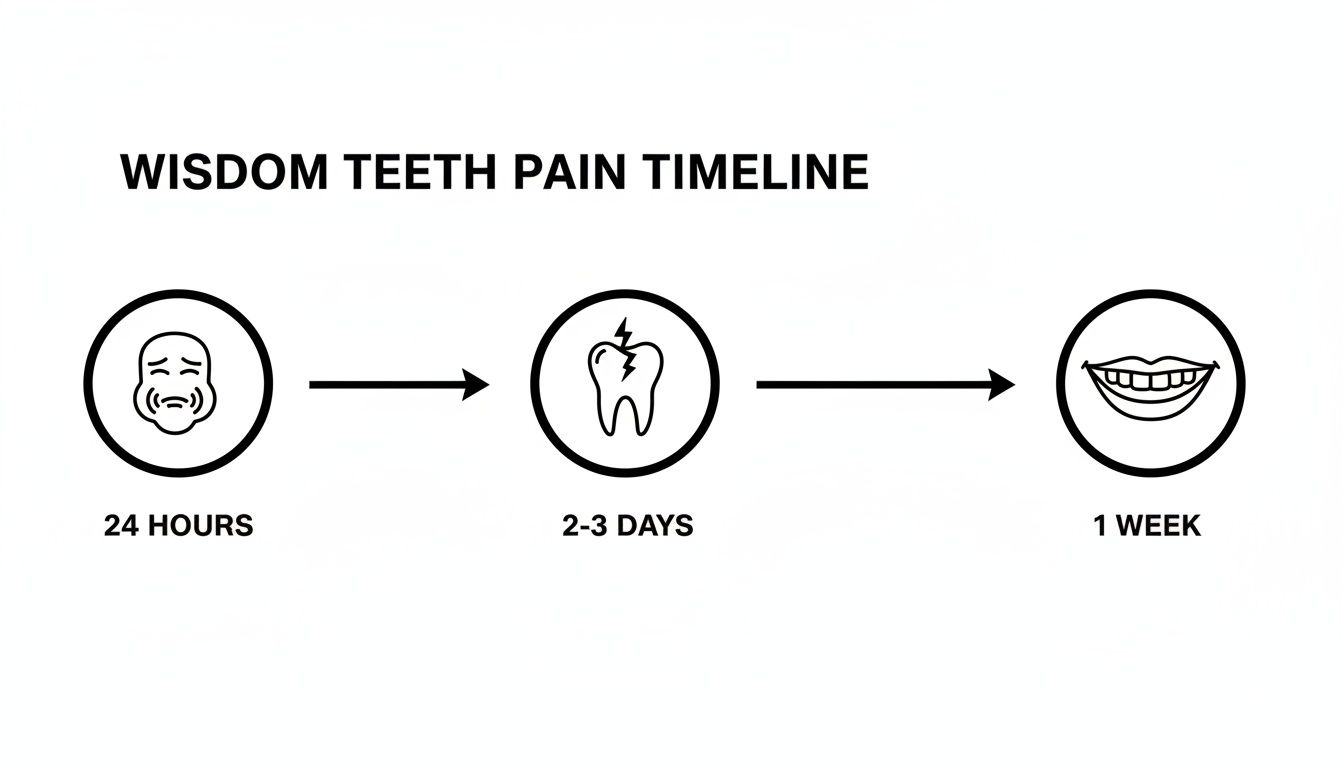
The key thing to remember is that the toughest part is short. With a bit of careful aftercare, you'll see steady improvement after just a few days.
To give you a clearer picture, here’s a simplified breakdown of what to expect day by day.
Wisdom Teeth Pain Recovery At A Glance
| Timeframe | Typical Pain Level | Key Aftercare Tip |
|---|---|---|
| First 24 Hours | Moderate soreness as anesthesia wears off. | Use ice packs on your cheeks for 20 minutes on, 20 minutes off to manage swelling. |
| Days 2-3 | Peak discomfort and swelling. A dull, throbbing ache is common. | Stick to a soft-food diet (think smoothies, yogurt, soup) and keep up with pain meds. |
| Day 4 | Noticeable improvement. Pain subsides to a dull ache or tenderness. | Begin gentle saltwater rinses after meals to keep the area clean. |
| End of Week 1 | Minimal discomfort. Most swelling and bruising have faded. | You can slowly start reintroducing more solid foods as you feel comfortable. |
This table is just a general guide, but it helps set realistic expectations for the healing process ahead.
The First 24 Hours Post-Procedure
Right after your procedure, as the local anesthetic wears off, you'll start to feel some soreness and discomfort. Don't be alarmed; this is your body's natural healing response kicking in. Swelling will also begin to appear, which is why we tell our San Diego patients to get an ice pack on their cheeks right away—20 minutes on, 20 minutes off. Your main job during this first day is to rest and stay on top of your pain medication schedule.
Days 2-3: The Peak Discomfort Phase
For almost everyone, pain and swelling hit their peak sometime during the first 48 to 72 hours. This is when your body is doing the heavy lifting to heal the extraction site. Sticking to soft foods and being extremely gentle with your oral hygiene are non-negotiable during this time. The good news? This phase is temporary. For straightforward extractions, it's very common to feel a lot better after just three days. For some great tips on post-procedure care, Delta Dental has a helpful guide you can review here.
Day 4 And Beyond: Turning The Corner
By the fourth day, most of our San Diego patients tell us they're finally feeling like they've turned a corner. That sharper pain starts to fade into more of a dull, manageable ache. You'll also see the swelling begin to go down, which means you can start slowly adding some semi-soft foods back into your diet. By the end of the first week, the vast majority of people are well on their way to a full recovery, with just a little lingering tenderness at the site.
Navigating The First 72 Hours After Your Procedure
Let's be honest: the first three days after getting your wisdom teeth out are the toughest. This is when your body kicks its healing process into high gear, and that means you'll likely feel the most swelling and discomfort. Here at Nimmi Shine Dental, we want to give our San Diego, CA patients a straightforward, no-nonsense roadmap to get through this initial phase as comfortably as possible.
Think of these first few days as a healing sprint. Your only job is to rest, manage the swelling, and stay ahead of the pain. The goal is to manage discomfort proactively, not wait for it to become a problem.
Managing Pain And Swelling
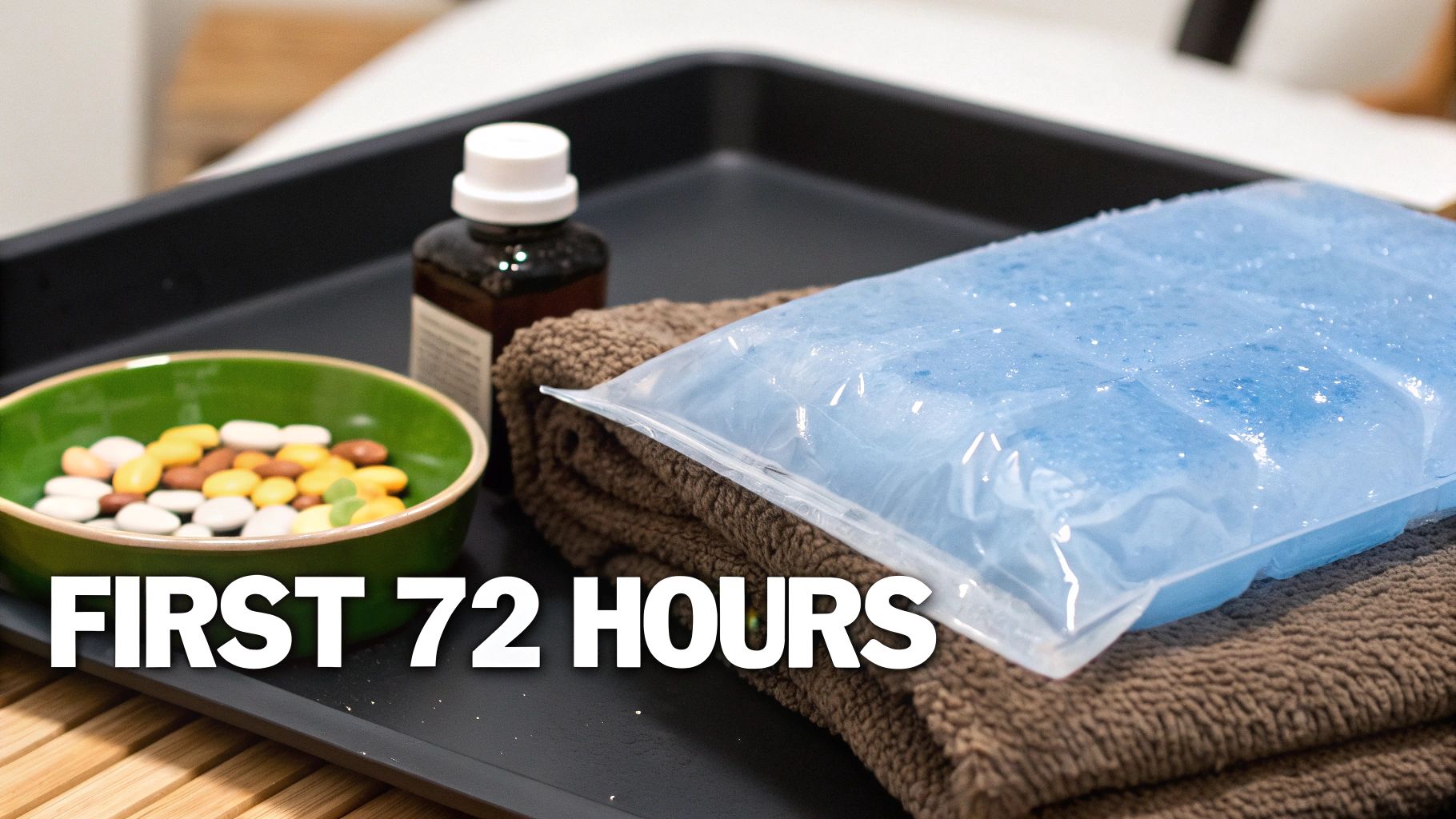
For the first 24 to 48 hours, your best friends are going to be your prescribed medication and a good ice pack. It's really important to take your pain relievers on the schedule we give you, even if you’re not feeling much pain at that exact moment. This strategy keeps the discomfort from building up and becoming overwhelming.
Along with medication, grab a cold compress or a bag of frozen peas. Apply it to the outside of your cheek for 20 minutes on, then 20 minutes off. It sounds simple, but this routine is incredibly effective at minimizing the swelling that causes a lot of that post-op ache.
Once you hit day three, you can switch things up. Swap the cold packs for warm, moist compresses. This warmth will help soothe any jaw stiffness and improve blood flow to the area, which speeds up healing.
Your Diet And Hydration Guide
What you eat (and how you eat it) is a huge deal right now. You need to protect the extraction site while it’s vulnerable. For the first few days, you'll be on an exclusive diet of soft, cool foods.
- Applesauce and Yogurt: They're easy to get down and don't require any chewing.
- Lukewarm Soups and Broths: Just make sure they aren't hot, as heat can sometimes encourage bleeding.
- Smoothies and Puddings: A great way to get nutrition without disturbing the healing clot.
- Scrambled Eggs and Mashed Potatoes: When you feel up to it, these are good "next-step" foods.
Staying hydrated is just as crucial, but do not use a straw. The suction can pull out the blood clot that’s forming in the socket, which leads to a very painful complication called dry socket. Just sip slowly from a glass. For a complete list of dos and don'ts, check out our detailed guide on what to do after a tooth extraction and what to avoid.
Activities To Avoid
Your body needs to focus all its energy on healing, so you need to take it easy. For at least the first week, that means no strenuous exercise, heavy lifting, or anything that gets your heart pumping hard. You also need to steer clear of smoking and alcohol—both can seriously slow down healing and increase your risk of infection. Just rest. It truly makes all the difference.
Why Every Patient's Recovery Journey Is Different
One of the first questions we get from our San Diego patients is, "So, how long is this really going to hurt?" The honest answer is always the same: it depends. While there's a general timeline most people follow, no two recovery experiences are identical. Several key things can change how quickly you bounce back and how much discomfort you feel.
At Nimmi Shine Dental, we map out a unique treatment plan for every patient because we know these differences matter. Your recovery is a direct reflection of your dental anatomy, your overall health, and—most importantly—how you care for yourself after you leave our San Diego, CA office.
Type Of Extraction: Simple Vs. Surgical
The biggest factor influencing your recovery timeline is how complex the extraction was. A simple extraction is just what it sounds like—the tooth has already broken through the gum line, making it much easier to remove. For these, recovery is usually faster, and you'll notice the discomfort fading significantly within a few days.
Then there's the surgical extraction. This is what we do for an impacted wisdom tooth, which is a tooth that's stuck under the gums or growing in at an odd angle. It's a more involved procedure that requires our dentist to make a small incision. Because of that, healing naturally takes a bit longer, with more swelling and soreness being completely normal for the first week or so.
Think of an impacted wisdom tooth like a plant trying to push through a crack in the pavement. It's stuck and can't emerge correctly, so removing it requires a more delicate touch to avoid disrupting the area. This is why a surgical extraction simply needs more time to heal properly.
Your Health And Lifestyle Habits
How well your body heals, in general, has a huge say in your recovery. A few personal factors can really make a difference in how long the pain sticks around after your wisdom teeth are out.
- Age: Younger patients, especially teens and young adults, often have an easier time. Their tooth roots aren't as deeply set, and their bone tends to be more pliable, which makes for a quicker healing process.
- Overall Health: If you have any conditions that impact your immune system, your body’s healing response might be a little slower. It’s crucial to share your complete medical history with our team beforehand.
- Smoking: This is probably the biggest roadblock to a smooth recovery. Smoking tightens up your blood vessels, slowing the flow of oxygen and nutrients your gum tissue needs to heal. The sucking motion can also pull out the protective blood clot, leading to the notoriously painful "dry socket."
- Following Aftercare Instructions: Your commitment to post-op care is your secret weapon. Resting, using ice packs to manage swelling, and sticking to soft foods are non-negotiable for a fast and comfortable recovery.
Study after study shows that while the empty socket takes weeks to fill in completely, most people see a major drop in pain within the first week—if they follow their aftercare plan. What you do in those first few days makes all the difference. You can find more details about post-extraction recovery timelines here to see how it all fits together.
When It's Time to Call Us: Red Flags to Watch For
While the vast majority of wisdom teeth extractions go off without a hitch, it’s smart to know what’s normal and what isn’t. Think of it as being an active partner in your own healing. At Nimmi Shine Dental, we want our San Diego patients to feel confident, not anxious, so knowing a few key warning signs can make all the difference.
For the most part, recovery is a straight line of feeling better each day. If you notice a sudden U-turn—especially if your pain gets worse instead of better after day three—that's your body telling you something is off. That’s when you should give our office a call.
The Dreaded "Dry Socket"
You've probably heard of a dry socket, and it's the most common reason for a post-extraction phone call. After a tooth is pulled, a blood clot forms in the socket. This clot is like a natural bandage, protecting the bone and nerves underneath while everything heals. A dry socket happens when that clot gets knocked out or dissolves before it's supposed to, leaving those sensitive areas exposed.
The signs of a dry socket usually pop up 2 to 5 days after your procedure. Keep an eye out for:
- A deep, throbbing pain that your prescribed pain medication can't seem to touch.
- Pain that seems to spread from the socket up toward your ear, eye, or neck.
- A foul taste in your mouth or a bad odor you can't get rid of.
- When you look in the mirror, you can see the whitish color of bone in the socket instead of a dark red clot.
If you're dealing with a nasty, throbbing pain a few days after your procedure, it's worth learning more about the specific signs of dry socket and when to seek help.
Spotting an Infection
Infections are less common, but they're still a possibility. Your mouth is working hard to heal, but sometimes bacteria can get in the way and set up camp. Catching an infection early is key to getting it treated quickly so you can get back on the road to recovery.
Here’s what to look for:
- Developing a fever or getting the chills a few days after surgery.
- Swelling that gets worse after the third day, not better.
- Any pus or yellowish discharge coming from the extraction site.
- Bleeding that continues and doesn't stop when you apply firm, gentle pressure with gauze.
Your recovery should be a story of steady improvement. Any significant step backward—like a sudden spike in pain or new symptoms appearing days later—is your cue to contact us. Don't sit at home and worry; our team is here to help.
While most people heal quickly, a small number of patients experience delayed healing. A dry socket, for example, only affects about 2-5% of cases, but it causes a level of pain that goes far beyond the normal recovery window. This is exactly why it's so important to contact your dentist immediately if your pain suddenly gets worse.
Here at Nimmi Shine Dental, we take every precaution to minimize these risks. We're committed to making sure our San Diego patients have a safe and supported recovery, because your peace of mind is our top priority. We're always just a phone call away.
How We Handle Extractions at Nimmi Shine Dental
Your comfort and peace of mind are at the heart of everything we do, especially when it comes to a procedure like a wisdom tooth extraction. We know that questions like "how long does wisdom teeth extraction pain last?" often come from a place of real anxiety. Here in our San Diego office, we've built our entire patient experience around easing that worry and making sure you feel confident and cared for from start to finish.

Our approach is a bit different because we see you as a whole person, not just a set of teeth. That philosophy is baked into every single step of your journey with us.
Precision Planning for a Smoother Recovery
A comfortable recovery doesn't just happen by chance—it starts long before your extraction day. We use advanced digital imaging to create a precise, detailed map of your jaw and the exact position of your wisdom teeth. This gives our dental team a clear blueprint to plan the least invasive surgical path possible.
Why does that matter? Less trauma to the surrounding tissue during the procedure almost always translates to a quicker, more comfortable healing process. This careful planning is key to reducing post-op swelling and soreness, which directly shortens your recovery timeline.
Sedation Dentistry for a Calm Experience
Let's be honest: dental anxiety is incredibly common. We believe it should never be a barrier to getting the care you need. That’s why we offer sedation dentistry options right here for our San Diego patients. Whether you just need something to take the edge off or prefer to be in a much deeper state of calm, we'll find the right solution for you.
Our goal is simple: to create a serene, stress-free environment where you feel completely at ease. With sedation, many of our patients have little to no memory of the procedure itself. They get to start their recovery from a place of peace, not stress.
A Focus on Your Total Health
At Nimmi Shine Dental, we practice what’s known as total-health dentistry. This just means we understand the critical connection between what happens in your mouth and your overall well-being. A smooth wisdom teeth extraction does more than just solve an immediate problem; it prevents future issues like infection or crowding that can affect everything from your bite to your quality of sleep.
This procedure isn't just about removing a tooth. It's about protecting your long-term health. For some, it’s even the first step in a bigger plan to get their ideal smile, clearing the way for future cosmetic dentistry treatments like veneers or even Invisalign. As a family dentistry practice serving San Diego, we're all about building lasting relationships based on trust, so you always feel supported.
Ready to Talk About Your Wisdom Teeth?
Hopefully, this guide has helped take some of the mystery out of wisdom tooth extraction and what to expect during recovery. Knowing what's normal and what's not can make the whole process feel much less intimidating. Here at Nimmi Shine Dental, we see ourselves as your partner in all of this, providing top-notch oral surgery and family dentistry right here in San Diego, CA.
If you’ve been putting off that conversation about your wisdom teeth, or if you're already dealing with pain, now is the perfect time to get some answers. Letting things go can often lead to bigger problems down the road. We invite you to come in for a consultation with our team. We'll walk you through everything, including options like sedation dentistry to make sure you're completely comfortable.
The best thing you can do for your long-term oral health is to address potential problems early. Your comfort and well-being are what matter most to us.
Getting in touch is simple. You can give our San Diego office a call or hop onto our online booking system to find a time that fits your schedule.
Whether you're ready for an extraction, interested in cosmetic work, or just due for a check-up, we’re here to help you achieve a healthy, pain-free smile.
Your Top Wisdom Teeth Questions Answered
We get a lot of questions about wisdom teeth removal here at our San Diego practice. To help you feel more confident about the process, we've put together answers to some of the most common ones we hear from our patients.
When Can I Get Back To Work Or The Gym?
Most people with a desk job feel up to returning to work in about 2-3 days. But when it comes to physical activity, you'll need to take it easy for a bit longer. We strongly advise holding off on any strenuous exercise or heavy lifting for at least a week. Jumping back in too soon can cause bleeding or, worse, dislodge the crucial blood clot that protects the healing socket.
During your consultation, our team will give you a specific timeline based on your procedure and daily routine right here in our San Diego office.
What Are The Best Foods To Eat After The Procedure?
For the first few days, your diet is key. Think soft, cool, and easy. This approach is one of the best ways to protect the extraction site and keep pain and swelling to a minimum.
- Great choices to start with: Yogurt, applesauce, smoothies (but please, no straws!), and lukewarm soups are perfect.
- As you feel better: You can slowly work in semi-soft foods like mashed potatoes, scrambled eggs, and oatmeal.
- What to skip: Steer clear of anything hard, crunchy, spicy, or chewy for at least a week to avoid irritating the surgical area.
Following these food guidelines isn't just about comfort—it's the single best thing you can do to prevent a painful dry socket and have a smooth, predictable recovery.
Do My Wisdom Teeth Have To Come Out If They Don't Hurt?
That’s a fantastic question, and one we hear often. Even if your wisdom teeth aren't causing you any pain right now, they can still be a source of future trouble. Because they’re so hard to clean, they can lead to problems like crowding, decay, damage to neighboring teeth, or even cysts.
Here at Nimmi Shine Dental, we use advanced imaging to get a clear look at what’s happening below the surface. This helps us work with you to decide if proactive removal is the right call for your long-term oral health.
How Can Sedation Dentistry Help If I'm Anxious?
We know that dental anxiety is very real, and we take it seriously. Sedation dentistry is an incredibly safe and effective way to help you feel completely calm and at ease during your entire procedure.
We offer several levels of sedation to ensure you have a comfortable, stress-free experience. Most patients have little to no memory of the extraction itself. It also helps our team work more efficiently, which often translates to an even smoother and quicker recovery for you.
Your comfort and long-term health are what matter most to us. Here at Nimmi Shine Dental, we are dedicated to providing personalized, top-quality care for families all over San Diego, CA and surrounding areas. Ready to take the next step? Schedule your consultation by visiting us online at https://nimmishinedental.com.
